John McGivern’s Main Streets
Crown Point, Indiana
Season 5 Episode 3 | 26m 48sVideo has Closed Captions
Crown Point, Indiana offers plenty to learn — and even more to enjoy.
Crown Point, Indiana has a lot to teach. John discovers corn ice cream, gemstones, creative art spaces and that spending time in jail can be ... fun. Emmy learns she enjoys mead, that renovation differs from restoration, and that even a courthouse can be entertaining. Learning is part of the fun in Crown Point!
Problems playing video? | Closed Captioning Feedback
Problems playing video? | Closed Captioning Feedback
John McGivern’s Main Streets is a local public television program presented by PBS Wisconsin
John McGivern’s Main Streets
Crown Point, Indiana
Season 5 Episode 3 | 26m 48sVideo has Closed Captions
Crown Point, Indiana has a lot to teach. John discovers corn ice cream, gemstones, creative art spaces and that spending time in jail can be ... fun. Emmy learns she enjoys mead, that renovation differs from restoration, and that even a courthouse can be entertaining. Learning is part of the fun in Crown Point!
Problems playing video? | Closed Captioning Feedback
How to Watch John McGivern’s Main Streets
John McGivern’s Main Streets is available to stream on pbs.org and the free PBS App, available on iPhone, Apple TV, Android TV, Android smartphones, Amazon Fire TV, Amazon Fire Tablet, Roku, Samsung Smart TV, and Vizio.
Providing Support for PBS.org
Learn Moreabout PBS online sponsorship- John McGivern: This Indiana town is famous for a courthouse and the gangster who got away.
- Announcer: Thanks to our underwriters.
Together doing good for 130 years.
Horicon Bank: It's the natural choice for community banking.
- There's no place like Oconomowoc.
Explore, play, shop, stay!
Visit Oconomowoc!
- My father taught me that to make great bakery, you have to do it the right way.
O&H Danish Bakery, where kringle traditions begin.
- Support for this program provided by Plum Media.
From first spark to final edit, it's all about bringing stories to life with purpose and precision.
- Announcer: Financial support has been provided by our friends at Greenfire, a construction management company, the Friends of PBS Wisconsin, and the Friends of Main Streets.
- Announcer 2: One way you can support your favorite show, and, of course, we mean this show, is to shop online in our store, where you'll find the perfect gift for that big fan.
And, of course, by big fan, we mean you!
Thanks for shopping.
♪ 'Cause these are our Main Streets ♪ ♪ Something 'bout a hometown speaks to me ♪ ♪ There's nowhere else I'd rather be ♪ ♪ The heart and soul of community's right here ♪ ♪ On these Main Streets ♪ - John: I am in Crown Point, Indiana, which is centered around this classic town square.
It's a growing community with a population of about 35,000 people.
So, it's a one-hour drive south of Chicago and a two hours' drive north of Indianapolis.
Interstate 65 goes right by here.
This is Crown Point.
- Emmy Fink: Now, if you look into the Crown Point area for, I don't know, five seconds, you're gonna run across the name Solon Robinson.
- John: The founder of Crown Point?
- Emmy: The founder, the postmaster, the gentleman who ran the general store, and the local author.
- John: Overachiever.
- Emmy: Completely.
- Did he write something about this place?
- He did.
So, he came here in 1834.
And at that time, there was a prairie that went on for as far as the eye could see.
He said, "What could exceed the beauty of this spot?
Why should we seek farther?"
I mean, obviously he loved that spot.
There were three things that really helped Crown Point grow, and they happen in this timeline.
Farming.
- John: Okay.
- Emmy: Lumber.
- John: Sure.
- Emmy: And the railroads.
And then, we have to mention location, because Crown Point is so close to Chicago and Gary.
And that really benefited them.
- John: Yeah, really great.
So, how did the name Crown Point happen?
Wait, wait, let me guess.
- In unison: Solon Robinson.
- Back to our book.
- Yeah.
- "We called it Crown Point "because it stands on a high ridge, "a natural crown above the lowlands.
"A fitting name for a place that we hope shall rule this region in justice and civility."
- That's really great.
- Right?
- We should go see what he was so excited about, shouldn't we?
- We should, and we should return this book 'cause I don't wanna pay a fee.
- We are outside the Old Lake County Jail and Sheriff's House.
This is Sandy Boyd.
How are you?
- Sandy Boyd: Hey, good to meet you.
- It's good to see you.
It was built as a house and the jail.
- Sandy: The law at the time when it was built was that the house had to be adjacent to the jail.
So it was built as a house and ten cells.
- Okay.
- So we're literally gonna go from the living room into booking.
Come on.
[laughs] In 1908, they built a three-story addition.
And then in 1929, they built another three-story addition.
- John: Which then brought the cells to how many?
- Sandy: There's over 150 cells in there.
- Just so you know, what I really wanna see and talk about is... - Yeah.
- John: Dillinger.
- Sandy: I tell people it's our claim to fame.
- Hey, John Dillinger, what's up?
- So, in 1933, Sheriff Roy Holly was shot and killed in a property dispute.
If a sheriff is shot and killed in the line of duty, his wife can finish his term of office.
So, they asked her.
They had twin daughters at the time, and they lived here in the house.
And they asked her, "Would you finish his term?"
And out of respect and honor of her husband, she said, "Yes, I will."
And then came Dillinger.
He had been caught in Tucson, Arizona, right?
But he was wanted in Indiana for the murder of Detective William Patrick O'Malley.
When they got here, they took him immediately up to the third floor into federal.
They even welded an extra bar on his cell so he couldn't escape, right?
Then somebody made the decision to move him down here to the first floor.
Three months later, March 3, about 8:30 in the morning, all of a sudden, Dillinger has a gun.
- How did he get the gun?
- One story, he carved a gun out of a washboard... - Okay.
- ...and he blackened it with shoe polish.
- Good story.
- Another story is the gun was smuggled in to him.
He convinced everybody that was a real gun.
He locks everybody up in a cell that was working here.
Now, Lillian had two machine guns in the office.
One from Porter County, one from Lake County, in case Dillinger's gang came.
- Yeah.
- Well, Youngblood and Dillinger picked those machine guns up.
So, they had machine guns, a hostage, they walked to the town garage, they took the sheriff's car, and they drove right down the middle of town.
And all the townspeople are like, "That's not Sheriff Holley."
- John: Wow.
- You know, they knew the car.
- John: Yeah, wow.
- Sandy: But once you cross state lines in a stolen vehicle, that's a federal offense.
Now the FBI is coming in after him.
After that happened, he sent a letter to "Clown" Point, Indiana.
Or "Wooden Gun," Indiana.
- No.
- It would get here.
So, you know.
- John: Such a good story.
- Sandy: I know.
- John: And can I tell you-- - Sandy: History is exciting.
- John: You really tell it well.
You do!
- Thank you.
- I'm completely invested.
- Sandy: Right!
- John: From 1915 to 1940, hundreds of people came through this courthouse every year.
They weren't criminals.
So, why did they come here?
[playful music] - They were here to get hitched.
This was called the Marriage Mill for two reasons.
Because the license was cheap and there was no waiting period.
Now, some bigger names got their marriage license here.
Rudolph Valentino and Cassius Clay, who you might know better as Muhammad Ali.
Check out this book.
It's a pretty thick book, right?
This is just two weeks of marriage licenses in June of 1920.
Look at all these couples.
- John: We are standing in front of the courthouse.
Iconic landmark built in 1878.
This is your hometown.
- Chris Pappas: It is, born and raised.
- So you're like a historic landmark as well, aren't you, Chris?
- I don't know about that.
- Come on.
What do you do in this building?
- So, we do all the catering, weddings and events inside of this building.
Almost 50 to 60 weddings a year.
- That's wild.
- Yeah, it's grown quite a bit since 2019.
And so, we are the go-to people for having historic wedding here on the square.
We also have an operating restaurant in the basement of this building too.
- Oh, it's nice.
It's kind of perfect, isn't it?
- Yeah, small, quaint, 40 seats.
That's 40 seats on the patio too.
- How do you know hospitality?
- Born and raised.
My family's been in the restaurant business for 55 years this year.
My dad started the restaurants in the '70s.
He was doing parties back in the '70s.
Now, I'm doing 'em in 2025.
- Can we take a walk?
- Of course, come on, right this way.
- John: I'd love to see the space.
And there was an initiative to get rid of it?
- Chris: They wanted to take it down.
And this group of entrepreneurs got together and put this building on the National Register of Historic Landmarks and saved this building.
- John: Very cool.
- Chris: It is cool.
They don't make it like this anymore.
- John: It's great that it's still here.
- Chris: I know, it's really cool.
So, this is the auditor's office and the treasurer's office, and now it's one big ballroom called the Maki Ballroom.
Yeah, we can sit about 200 people in here.
This is the old judge's bench.
And so, we ended up converting this into a bar.
- John: Oh, sure.
- Chris: Yeah, this is where the judges sat.
This is where the plaintiff and defendant would sit.
- John: Uh-huh, and this was the-- - Judge's chamber, which is now liquor storage.
- John: Okay.
- Chris: On the third floor, there is a full-size courtroom.
- John: This is it.
- Chris: It's massive, yes.
And the jury-- - The jury is ready to come back with a verdict.
[hand slams] Court come to order.
No idea how he ended up in the trunk of my car.
This guy is so guilty.
I'm not a judge.
People find me to be a little judgy... ...but not a judge.
It smells like my grandma's attic.
Oh, wow.
This way?
Careful.
- Chris: So these are all those... - John: Is that the bell right there?
- Chris: It is, yeah.
- John: What?
[bell tolls] [John laughs] There's light!
Wow, it's so cool!
Ooh, this is a beautiful building.
- Chris: It is.
- John: And Crown Point wouldn't be Crown Point if it weren't for this.
- Chris: You're right.
You're right, and it's just, it's iconic.
- John: You could be anywhere in what you do.
- Chris: True.
- John: And you're in your hometown.
- Chris: Yeah, I love it.
And bringing something back and doing something different.
[bright music] - I'm pretty sure John missed the very best part of the courthouse.
This lower level with all the shops.
I'm gonna be busy.
Just a quick appointment.
Now I'm nice and smooth.
I'm ready to shop!
Here at Antique Vault and Records, they have every sort of media you could ever want.
Cassettes are back, who knew?
Nordikreation carries all things Scandinavian.
Phyllis is the owner, and she handcrafts these beautiful Scandinavian earrings.
They're actually featured on a TV show called Vikings.
And Candy Cove, they have been here the longest, since 1988, and maybe they won't see me.
You will see lots of bulldogs around town because this right here, the Crown Point mascot.
Oh, look at this face.
Definitely one only a mother could love.
- John: This is your shop.
- Mike Moriarty: It is.
- This is your dad.
- This is my dad, yeah.
-Did you want me to say that?
- Yeah, that's okay, that's okay.
Let's talk about how this retail operation all started and what you guys do.
- Steve Moriarty: Well, the whole thing started back in the '70s, and I was on the road selling gems to jewelers until '94, when we opened the store.
- So, you've known this business your whole life?
- Yes, yeah, I've been... You know, he had his office, I remember, being in the basement of our house and then just having the gems always laying around.
They've just been around him all the time.
- Is that a diamond?
- This is not a diamond.
So, this is a natural aquamarine.
This is a August birthstone, peridot, from Pakistan.
We've got some tourmaline.
They can come in a wide variety of colors.
Probably every color of the rainbow.
- The first step in the process is lighting it up and you locate the inclusions.
And then we're either gonna grind it out or we'll go to the saw.
- Mike: Every piece is pretty much made to order.
- This is the faceting machine.
This is an Ultratech V5, which is probably the best machine on the market.
- And it does a good job.
- Good job?
- A good job?
- Great job.
- Great job.
That's what I meant, Steve.
- Okay, okay.
- Geez.
[laughs] - Mike: Your January birthstone.
These are garnets.
This is a Ethiopian opal.
- And that guy?
- Mike: So, this is a natural alexandrite crystal.
- Do you have a presence on YouTube as well?
- Yeah, we have, once a month, we do a live streaming gem show.
- John: They can shop while you're doing it?
- Steve: Yes.
- John: Wow.
- Steve: Yeah, they better, because a lot of the good ones go quick.
- John: They do?
- Steve: Yeah.
- Mike: It's huge for us.
That's a majority of our business now is online.
- Can you do what he does?
- I'm starting to learn more of what he does.
I have a lot to learn just because, you know, once you get into more of the valuable stones, you know, a slight mistake can cost you a lot of money.
- Figuring out what to cut from this, that's the real difficulty.
Getting rid of the bad stuff, that's half of cutting.
I mean, that's the difficult half of it.
So, that's one thing, you know.
53 carats started as 150 carats.
So, you average about 35% to 40% yield.
- Mike: People are surprised.
They can't fathom you have to lose that much.
So, what we're looking at there is a tanzanite.
- John: This started off from a stone that you bought from a miner.
This is rare, take a look.
- Yeah.
[laughs] - John: What happened?
[all laugh] Okay, this is a combination I've never heard of before, but I think I love it.
Mexican cuisine, take a look.
And pancake house.
Yum.
Casa Balbina has you covered from breakfast through dinner In the kitchen, it's a family affair, and it's become a community gathering place.
So, here's my problem.
I'm not sure if I should have these incredible enchiladas with the best mole sauce in the world.
Or the large stack.
Not a bad problem to have, huh?
Take a look.
This place is very cool.
It's J Moto Gallery.
Talk about where we're standing first and then what's in here.
- Joe Morris: We're standing in the original service station in Crown Point from 1927.
So, you can almost still smell Model A oil in the walls here, - John: A little bit, right?
- Joe: Yeah, yeah.
- John: And you said this would make what?
- It would make a great studio for my art 'cause I love old school vintage cars and trucks.
- John: You paint motorcycles.
- Joe: Yes.
- John: You paint hot rods.
- Joe: Yep.
- John: And you do art that I can hang on a wall as well?
- Yep, I've been doing it about 10, 12 years here in Crown Point.
My style is not like a normal painter.
It's very raw and very unpolished.
You know what I mean, and all patina and worn-out.
I feel like I was the painter back in the '30s here.
You know what I mean?
- Is there a job too big or too small that you will or won't do?
- No.
Here you go, right here.
I mean, it fills up my whole shop.
- John: It's kind of big.
- This showed up two days ago.
It's a '64 Cadillac.
She's a giant spaceship of awesomeness.
[John laughs] I'm really excited.
I basically call everything a new canvas.
So, this is my new canvas.
This is kind of that mixed-media collage art, that boxing poster.
I like to use a lot of words.
You know, there's also some pop art influences like Warhol and... This is inspired very much by, you know, the original café racers, Harley-Davidson and... - John: Yeah.
- Joe: ...and Indian.
Everything that I paint, I like.
I play guitar, so I wanna paint 'em.
I kind of have a cult following with the guitar guys.
I love doing fun things like this.
Goalie helmets, you know, this is like their persona.
I've done for NHL all the way to, you know, young kids.
This is a 1991 Sportster made to look like an old Knuckle.
- And this is classic J Moto, yes?
- Joe: Yes, this is a classic J Moto paint right here.
The frame, all this is paint.
A lot of it-- I try to like, fool people.
Like, that isn't real brass.
That's paint.
I guess you could call it faux patina, but, you know, it takes art to make it look where you really trick the eye.
Like, I do a lot of artwork and stuff, but, like, this gets me excited again.
This feels like me.
Like, even everyone says, "Oh, my God, you finally built the bike that you wanna do."
[engine rumbles] It's almost like there's no rules.
It's your rules.
[upbeat electric guitar music] [John and Joe laugh] - This is the oldest house in Crown Point.
It was built in 1846.
It was the home of Wellington and Mary Clark.
Wellington was a farmer and a traveling salesman.
And he knew Solon Robinson.
Yeah, the founder of Crown Point.
But I guess everybody knew him because it was a very small town back then.
If you want a real sense of this era, this pioneer era in the 1840s, you need to look at this house.
Take a walk through here.
You can walk through the bedrooms and you can walk through the kitchen.
The spinning wheel is authentic to the house.
Walking through the house, I also saw this piece of glass that looks like decorative glass, but it's something that could have saved your life back then.
Do you know what this is?
[playful music] - It's a fire grenade.
And no, it doesn't start fires.
It's an old-time fire extinguisher.
So, you fill it with a chemical solution, you throw it at the fire, and then you hope you don't have to call these guys.
Oh, and don't forget to run.
- Emmy, I love these houses on this street.
This is a neighborhood that all the wealthy people lived back in the day.
As my dad would have said, this is how the other half lives.
- So, the publisher of the Lake County Star newspaper once said that the people that lived here were so rich that they had ruffles on their shirt, which meant very, very fancy.
That's what this neighborhood is called, Ruffle Shirt Hill.
Isn't that cute?
- I got a call from somebody who owns a house here.
They don't live in the house, but he said, "If you wanna see what it was like back then, you can see the house."
So I can't wait to show you this house.
I... I feel like a realtor.
This is the Root Mansion, built in 1892, built by the Root family.
And if you look at the material they use, this is the business they were in.
What is it?
- Emmy: Lumber.
- John: Lumber company.
It was owned by the same family for 130 years.
Five years ago, they sold this house to Dave and Kathy.
I'd love to see what they did.
- I'm moving here.
[John laughs] Talk about open concept!
Okay, so, right... - John: They did a great job.
- Emmy: They probably restored it?
- John: No, they renovated.
- Emmy: Okay, tell me the difference.
- So, restoration, they would have brought it back to exactly how it looked back then.
So, they renovated, but certainly honored and gave a nod to what it was like back then.
- Emmy: I mean, all the-- Look at this detail and the pillars.
- John: Beautiful, yeah.
Look at the kitchen.
- Emmy: Look at all the seating, and, like, doesn't it just make you wanna have a party?
- You could have three more kids, couldn't you, if you had this.
- Oh, too far, McGivern.
Too far.
- I have to tell you, this is something smart that they did.
There was a mansion in Valparaiso that was being demolished, so they went there and they brought some of the materials here because they were the same era.
- Emmy: Oh, sure.
- John: This bench came out of that Valparaiso mansion, and this staircase came right out of that mansion.
- Emmy: The house is just so big that after, you know, coming down the stairs, you need a good place to sit just to... - Don'tcha?
- ...you know, take a breather.
Do we think this is the original fretting?
- John: I know it's not, no.
Somebody created this fretting to look like original fretting.
- Okay, I know exactly what you would use this little space for.
- This curved alcove?
- Yes.
- What?
- You would use it as your morning coffee, newspaper reading area.
- You have to.
The windows-- Did you notice these were curved?
- Emmy: They're so pretty.
- John: But Kathy was like-- They were afraid they had to replace these.
To replace curved windows, $10,000 to $20,000.
But they're in great shape, so they can keep them.
- Oh, gosh, okay, so this would be the stone foundation.
- John: The stone foundation.
- Emmy: Okay.
This has a really cool, like, vibey character.
- John: Yeah, it's like your own little grotto.
- Maybe we can talk to Dave and Kathy and we could throw a party here.
- We're not talking with Dave and Kathy.
[laughs] - I am so in luck today 'cause I'm at Manic Meadery, where they make wine, cider, and mead.
Wine, of course, fermented grapes, cider, fermented apples, but mead: fermented honey.
And get this, the mead flavors change based off of what plants and flowers the bees visited.
Isn't that wild?
- Haley Webb-Bunde: For the meads, we have the Gibby's Sweet Clover.
- Emmy: Okay.
- And this one has notes of white grape, peach, and cinnamon.
- Oh, that is so light and smooth and fantastic.
- This one's also a mead.
That's our Elliot.
That's a flagship blueberry mead that we have year-round.
- Emmy: So different.
- Haley: Very, yes.
- Emmy: Haley, I'm a fan for life.
- Haley: Okay, enjoy.
- John: I am at Niemeyer's Landscape Supply.
You're the Niemeyers, aren't you?
- Jessica Niemeyer: We are.
- Nathan Niemeyer: Yes, we are.
- I read some history on this place.
Can we go way back?
- We first were founded in 1948 by my grandfather, Clarence.
We were primarily a farming community, so that's basically where we got our roots from, you know.
- John: Farm is what it was.
- Farming.
The farming industry.
- After Clarence came, Nathan's dad, Leroy, he developed more of the decorative stone, mulch, dirt.
- Nathan: And then I came along.
And then the next logical choice was opening a garden center.
We just needed something bigger and better.
And then now, we're, this is where we're at.
- You have somebody here who walks around with your guests, with your customers.
- Wayne is a great educator.
He's an outstanding team member and someone that we are so grateful to have with us.
- Wayne Gruber: How are you, John?
- Good to see you.
- Nice to see you as well.
This is the outdoor area that we have with all these amazing plants.
We are looking at perennials, we are looking at shrubs, we are looking at trees.
- Part of our job is to help educate the customers that come in.
For someone to be good, they need to have plant knowledge... - Nathan: Passion.
- Jessica: Definitely, passion, customer service, wanting to help customers, to be educated, to have a positive attitude.
But our customers come back because of the service they receive here.
So, we are grateful for that.
- You're gonna get six to eight weeks of bloom on these particular plants.
The ideal way is to have your spot, know your light, know your water requirements, know your soil, and then come to the garden center and shop for that plant that fits those circumstances, and that also has the aesthetics.
We vary in size anywhere from, like, three foot up to about 10 foot tall with this group.
I'm pretty intense with my landscape, not only here at work, but it's at home too.
That particular plant with the pinecones on it.
- Yeah.
- That's white pine.
A Japanese white pine.
- As far as trends?
- For the garden center, there's always new plants available, and we get excited when we get a new variety in.
- There are new introductions all the time.
In perennials, there's always new shrubs coming out, new forms of it, new variegations, new takes on some of the plants that are out there.
We've got some of these beautiful tropicals, amazing houseplants.
There's a skill to it.
- John: It's a big business.
- It is, it is.
One we're very proud of.
Nothing brings me more pleasure than when a customer says, "I am so glad that I stopped by.
"I can't wait to come back.
I can't wait to tell our friends about you."
- Okay, Wayne, it's been a pleasure.
- It has.
- Okay, well, I'm going to check out now.
- Sounds great.
- See ya.
- Now, this is a place I feel comfortable: the softball diamonds.
Many years in high school, I played traveling fast-pitch.
My mom and dad were bringing me all over the Midwest to play in these exact tournaments.
Let me tell you, most towns, they have two or three softball diamonds.
but Crown Point has 10 of them, all together at the Crown Point Sports Complex.
And in the colder months, they have a dome that has a soccer field, a football field.
They even host the World Wiffle Ball Championship.
Well, while I'm here, I might as well give some softball lessons.
- John: I'm excited.
We're at a place called Azucar, and it's ice cream.
You own an ice cream shop?
- Julian Bravo: Yes.
- Come on!
It's the best, isn't it?
- Oh, yeah.
- Maythe Bravo: Fresh fruit.
- John: What are we making today?
- Julian: Banana with Nutella.
- John: How do you guys know about ice cream?
- Ever since I was a kid, we flew out to Mexico and we pretty much ate ice cream.
- They're kind of doing all the work.
Shh.
- Julian: My dad's oldest sister started making ice cream when she was young, and when she got here, Crown Point, three years ago, she's like, "Well, where's the ice cream?"
- John: Really?
- Yeah.
[laughs] This is the machine.
- This one right here.
It was like, "Yeah, I got a aunt that does that."
She's like, "Well, then what are you waiting for?"
We flew out there.
We stayed out there for a month, learned everything, everything.
- John: Wow.
Trained.
- Yep.
- John: Tres leches, pistachio.
These recipes came from your aunt in Mexico?
- Julian: Yeah, yeah.
- Look at the birthday cake.
Kids love this one, don't they?
- Julian: Oh, yeah.
- John: The most popular ice cream that you serve here is what?
- Maythe: Corn.
- John: Corn.
- Maythe: Corn ice cream.
- Wait a minute.
What is going on here?
Corn ice cream, my new favorite thing in the whole world.
Nice visit, you guys, see ya.
- Julian: All right.
[Julian and Maythe laugh] - And we have avocado popsicle.
It's really popular.
- John: Avocado?
- Maythe: Avocado.
It's sweet, it's really good.
- It's so sweet and creamy and just delicious.
So, I think of corn as savory, I think of avocado as not sweet.
How does it make it, you know, delicious?
- Add sugar.
[all laugh] - Azúcar?
- Yeah, azúcar.
- Maythe: 45 different flavors.
- John: 45 different flavors?
- Maythe: Yeah.
- John: And flavors change for you all the time?
Yes?
- Julian: Yeah.
The one that pretty much stays is obviously the the butter pecan, the coffee, the vanilla, the chocolate.
The number-one seller of all our ice cream is the corn.
- John: This should last how long?
Last through the week?
- Julian: No.
- John: No.
- Julian We have to have three trays of those.
- John: Or you're gonna run out?
- Julian: Yeah.
- John: Did you think you'd ever be in the ice cream business in Crown Point, Indiana?
- Julian: Never thought.
- John: Never thought?
- Julian: No, no, I went to high school here, and I used to walk around this town.
Never knew that I was gonna open up an ice cream shop.
We started in a small, small location.
And because-- Pretty much all this happened because of the community.
- John: Because of the community.
- Community.
- John: Yeah.
- You know, for us, I'm thankful for them.
- Yum.
[upbeat music] Emmy, I love Crown Point.
It's just so comfortable.
- Weren't the locals just next-level nice?
- Really nice, yeah.
And they've kept their small-town feel, even though they're just growing.
- They are, and that's really something to be celebrated.
Should we show off our bench?
- Let's celebrate.
Oh, look at that, Crown Point!
♪ There's nowhere else I'd rather be ♪ ♪ The heart and soul of community's right here ♪ - All set?
[claps] - Who am I talking to?
Several years in high school... [rhythmic clapping] [laughter] We're talking about important things, but... let's just address the elephant in the room, people.
[elephant trumpets] - [laughs] She is killing me with her non-interest!
[laughs] [high-five] I'm going home.
[laughs] - Announcer: Thanks to our underwriters.
- Together doing good for 130 years.
Horicon Bank: It's the natural choice for community banking.
- There's no place like Oconomowoc.
Explore, play, shop, stay!
Visit Oconomowoc!
- My father taught me that to make great bakery, you have to do it the right way.
O&H Danish Bakery, where kringle traditions begin.
- Support for this program provided by Plum Media.
From first spark to final edit, it's all about bringing stories to life with purpose and precision.
- Announcer: Financial support has been provided by our friends at Greenfire, a construction management company, the Friends of PBS Wisconsin, and the Friends of Main Streets.
- Announcer 2: One way you can support your favorite show, and, of course, we mean this show, is to shop online in our store, where you'll find the perfect gift for that big fan.
And, of course, by big fan, we mean you!
Thanks for shopping.
- Is she mad or happy?
- Emmy: I don't know.
Her eyes are closed.
- Good day or bad day?
Hard day or easy day?
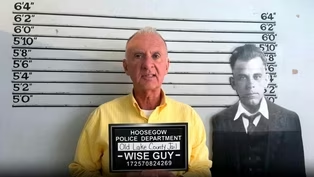
Preview - Crown Point, Indiana
Preview: S5 Ep3 | 30s | Crown Point, Indiana offers plenty to learn — and even more to enjoy. (30s)
Providing Support for PBS.org
Learn Moreabout PBS online sponsorship











Support for PBS provided by:
John McGivern’s Main Streets is a local public television program presented by PBS Wisconsin