
La Crosse: Oneota
Clip: Special | 5m 8s
The ancient Oneota culture formed a densely populated area in La Crosse.
In the 1920s and 30s, archaeologists from the Milwaukee Public Museum found artifacts that began to define a culture called the Oneota. (Part 3/8)
Problems playing video? | Closed Captioning Feedback
Problems playing video? | Closed Captioning Feedback
Wisconsin Hometown Stories is a local public television program presented by PBS Wisconsin
La Crosse: Oneota
Clip: Special | 5m 8s
In the 1920s and 30s, archaeologists from the Milwaukee Public Museum found artifacts that began to define a culture called the Oneota. (Part 3/8)
Problems playing video? | Closed Captioning Feedback
Where to Watch Wisconsin Hometown Stories
Wisconsin Hometown Stories is available to stream on pbs.org and the PBS app.
Clip: Special | 4m 22s | The growth of its three colleges La Crosse's adaptation to the post-lumber economy. (4m 22s)
Clip: Special | 6m 14s | The confluence of the three rivers gave life to the city in the middle of driftless area. (6m 14s)

Clip: Special | 9m 29s | Rebuilt and revitalized La Crosse is characterized by high tech and higher education. (9m 29s)
Clip: Special | 1m 39s | Follow the evolution of the city at the junction of three rivers. (1m 39s)
Clip: Special | 10m 10s | Adolf Gundersen arrived in La Crosse from Norway and revolutionized medical care in town. (10m 10s)
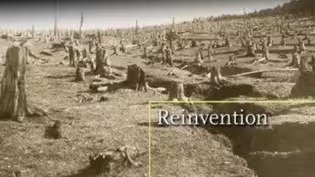
Clip: Special | 10m 36s | La Crosse became an industrial town after the decline of lumber industry. (10m 36s)
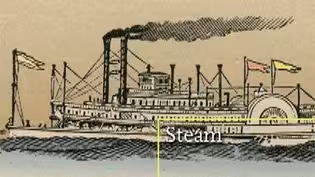
Clip: Special | 8m 50s | Steamboats, steam engines and steam-powered sawmills drove the economy to prosperity. (8m 50s)
Providing Support for PBS.org
Learn Moreabout PBS online sponsorship















Support for PBS provided by:
Wisconsin Hometown Stories is a local public television program presented by PBS Wisconsin